PaneModel: Bringing Manufacturing to Life at Trade Shows
2026/06/22
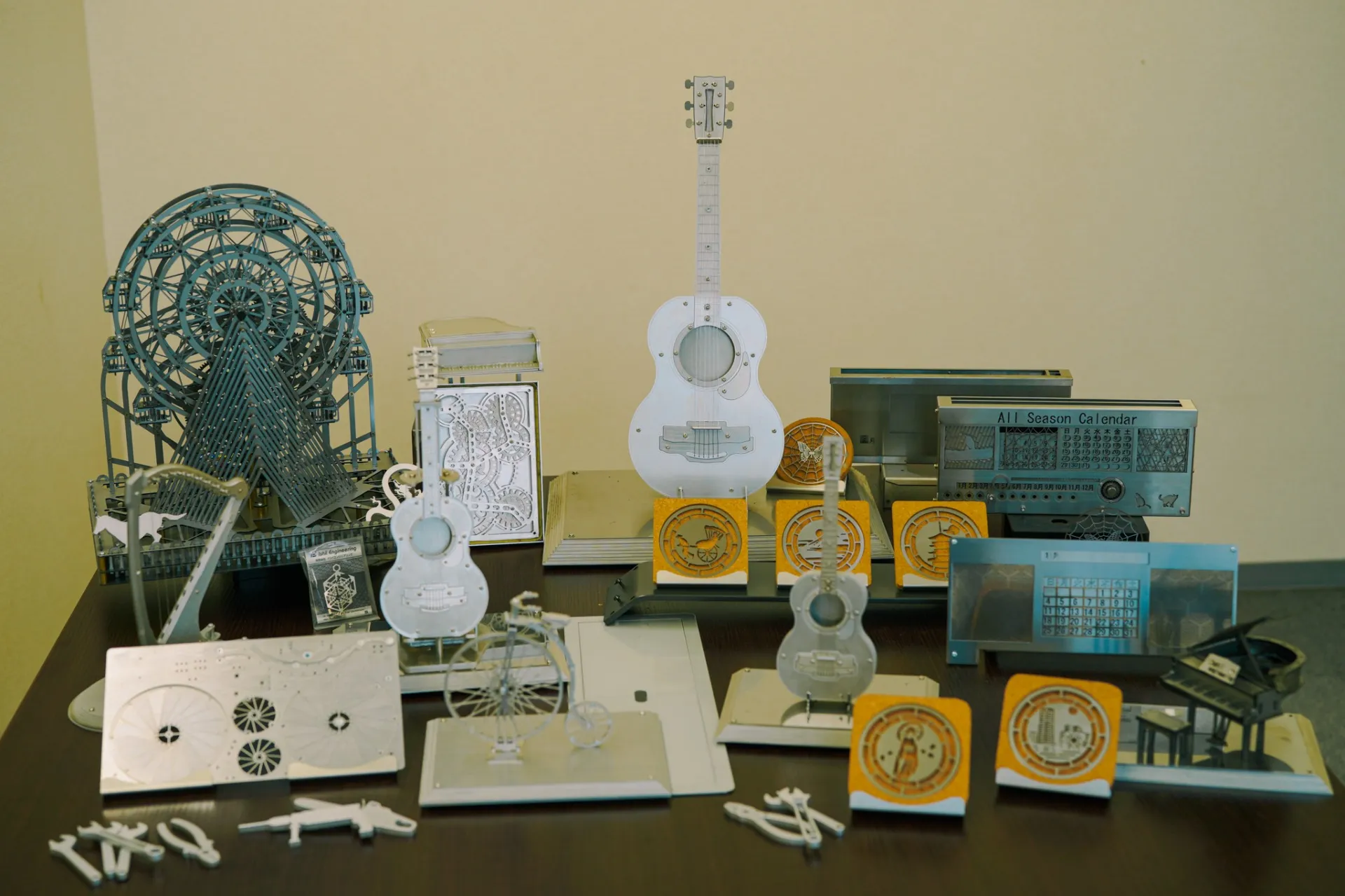
The Power of Factory Models at Trade Shows
Companies exhibit at trade shows for many reasons. Some aim to introduce new technologies, others seek to increase awareness of their products, and many hope to connect with potential customers and business partners. However, no matter how innovative a technology or product may be, communicating its value clearly within a limited amount of time is never easy.
At trade shows, visitors move quickly from booth to booth, often with only a few moments to decide where to stop and engage.
In such an environment, one of the most effective ways to attract attention, spark interest, and deepen understanding is through the use of models.
Factory models such as PaneModel, developed by Ishii Engineering, create a unique presence within an exhibition space. They allow visitors to understand the overall structure of a factory and the arrangement of equipment in a way that drawings, photographs, and informational panels alone often cannot.
Today, many exhibitors rely on presentation boards, videos, and digital displays. These are certainly important communication tools. However, two-dimensional materials do not always convey the scale of equipment, the relationship between facilities, or the flow of a manufacturing process in an intuitive way. This is particularly true for factories and production lines, where understanding the overall system is essential.
Models possess a remarkable ability to communicate the big picture instantly.
The moment visitors see a factory model, they can immediately begin to understand key concepts:
- Is this a manufacturing facility?
- Which equipment plays the central role?
- How does the production process flow?
Before a conversation even begins, visual understanding has already taken place.
Models also have another important advantage: they naturally attract attention.
As visitors walk through an exhibition hall, three-dimensional objects stand out from their surroundings. A carefully crafted factory model is often enough to make people slow down, take a closer look, and stop at a booth. This is particularly valuable because the first challenge at any trade show is simply getting visitors to pause and engage.
Furthermore, models create opportunities for conversation.
Visitors frequently ask questions such as:
- “What does this equipment do?”
- “What process takes place along this production line?”
- “How does this facility operate?”
These natural questions allow company representatives to explain their technologies, expertise, and strengths in a meaningful and engaging way.
In this sense, a model is more than an exhibit—it is a communication tool.
Another important benefit of models is their ability to create lasting memories.
Trade show visitors may see dozens or even hundreds of booths during a single event. As time passes, many presentations begin to blend together. However, a booth featuring a distinctive factory model often remains memorable.
Visitors may not remember every detail, but they are likely to remember:
"That company with the impressive factory model."
For exhibitors, this kind of recognition is extremely valuable.
Of course, an effective model is not merely decorative.
Creating a model that communicates clearly requires thoughtful design decisions. The structure of the factory must be understood, the key features of the equipment must be identified, and information must be organized in a way that is easy for visitors to grasp.
Designers must decide:
- Which details should be faithfully reproduced
- Which elements should be simplified
- Which equipment or processes should be emphasized
It is through these decisions that a model becomes a truly effective exhibition tool.
Trade shows are important opportunities for companies to present their technologies and ideas to the world. Within that environment, models offer a powerful way to communicate complex concepts in three dimensions.
They help visitors understand.
They attract attention.
They create conversations.
And they leave lasting impressions.
The world of manufacturing contains many qualities that cannot be fully conveyed through words alone. Equipment layouts, production flows, and the overall structure of a factory are often best understood when they can be seen and experienced visually.
By transforming these concepts into something tangible, companies can communicate their technology, philosophy, and expertise more effectively.
At trade shows around the world, visitors often stop and admire a well-crafted factory model. That scene itself may be the clearest demonstration of the power that models possess.
A model is not simply a miniature building.
It is another language through which a company tells the story of its manufacturing.
----------------------------------------------------------------------
株式会社イシイエンジニアリング
神奈川県横浜市都筑区川向町922-27
電話番号 : 045-594-7255
FAX番号 : 045-594-7256
----------------------------------------------------------------------